

To Make a Monument is a multi-year project by artist Jan McCullough produced in collaboration with Household that explores untold acts and histories of labour, care and maintenance; fabrication and DIY; and the communities that form around them.
To create To Make a Monument, Jan McCullough used historical photography archives as starting points to connect with pragmatic and incidental gestures of work and working environments in two different neighbourhoods in Belfast.
She is interested in the unseen worker, the inventive ways that people solve problems, and the objects and structures they use in the process. The people that she meets and the materials and visual languages associated with these activities inform her sculptural installations, interventions and photographs.
To Make a Monument - Jan McCullough
2025
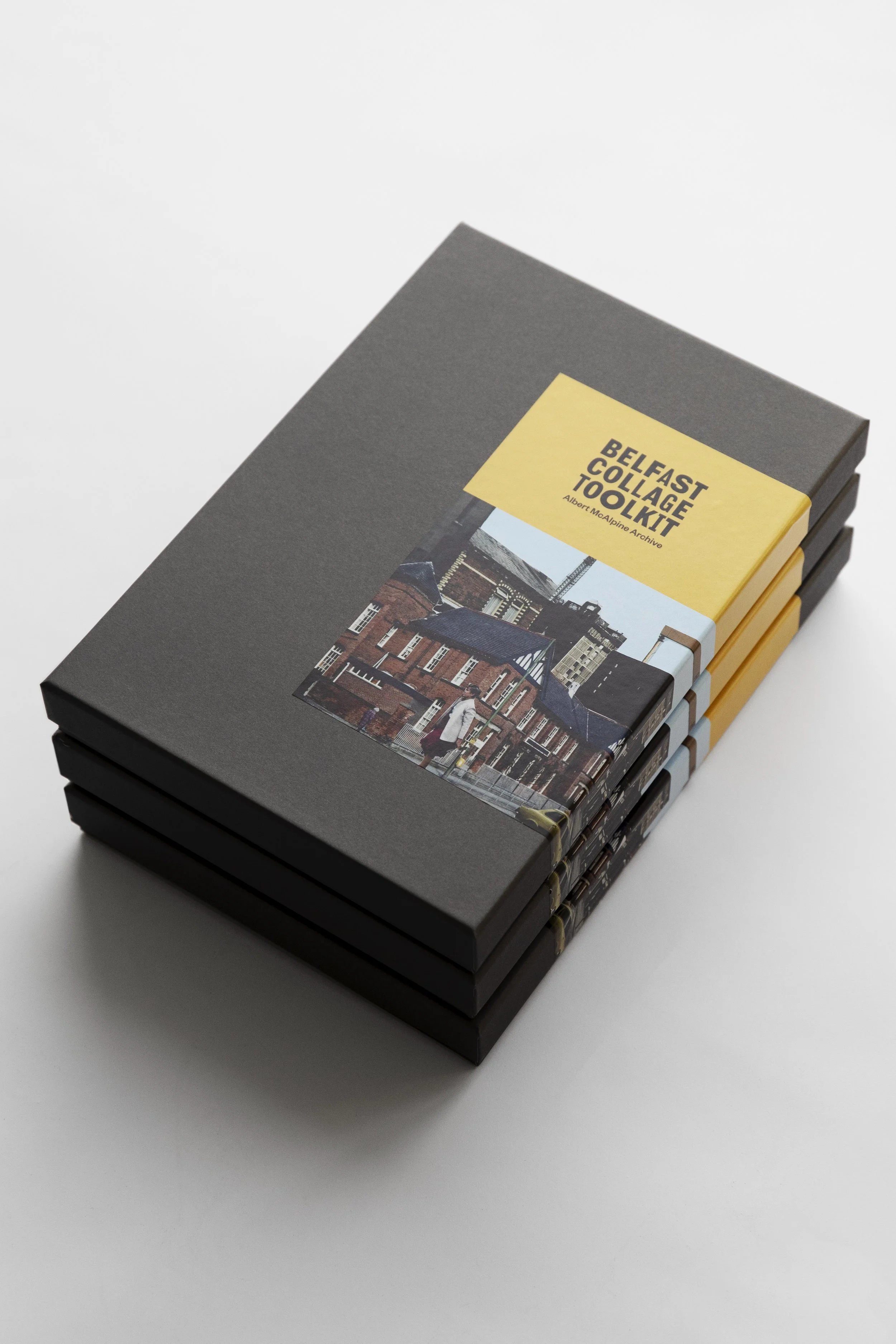
Belfast Collage Toolkit
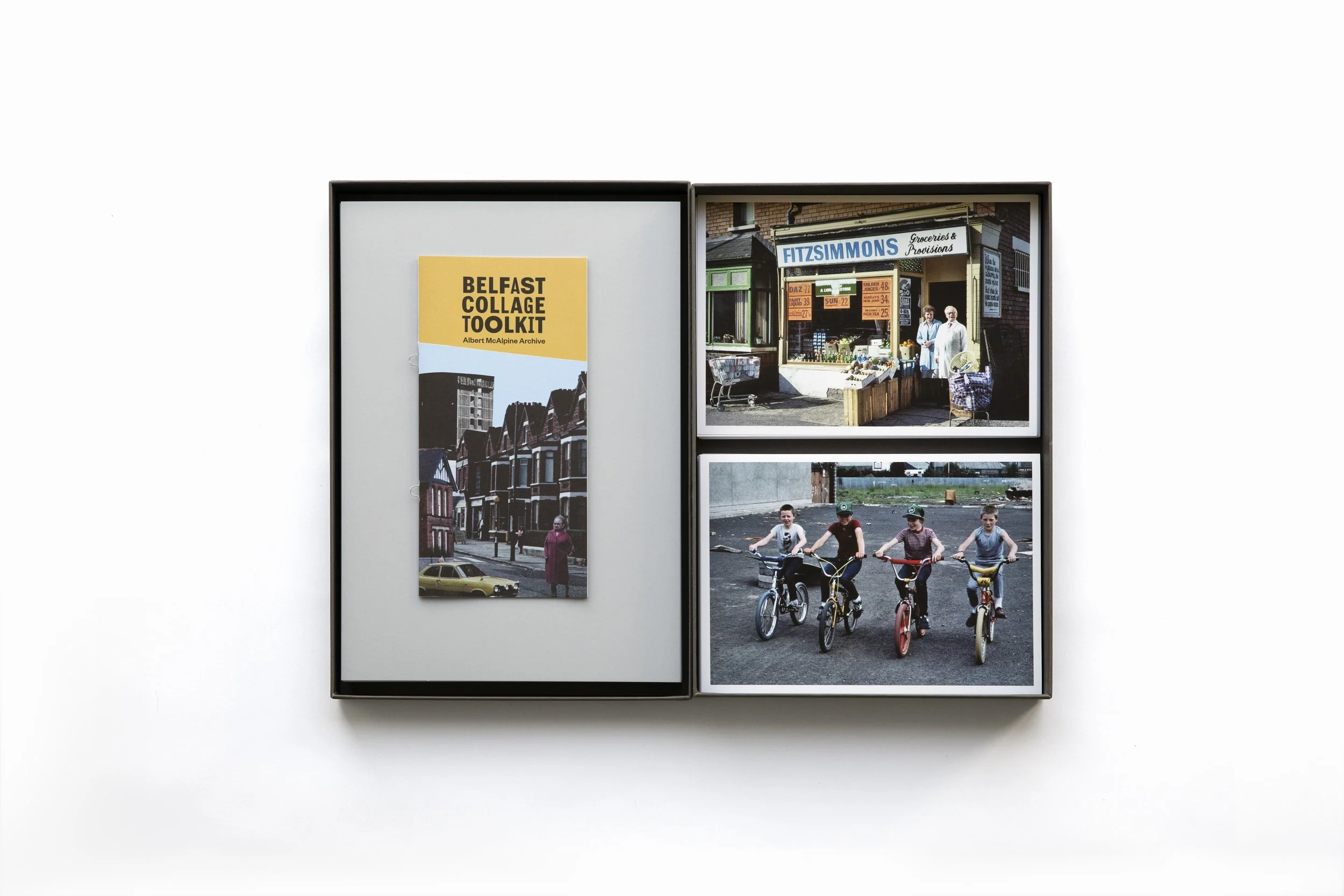
In 2025, Household produced the Belfast Collage Toolkit, a free educational resource for teachers and educators, developed by artist Jan McCullough in collaboration with designer Alex Synge.
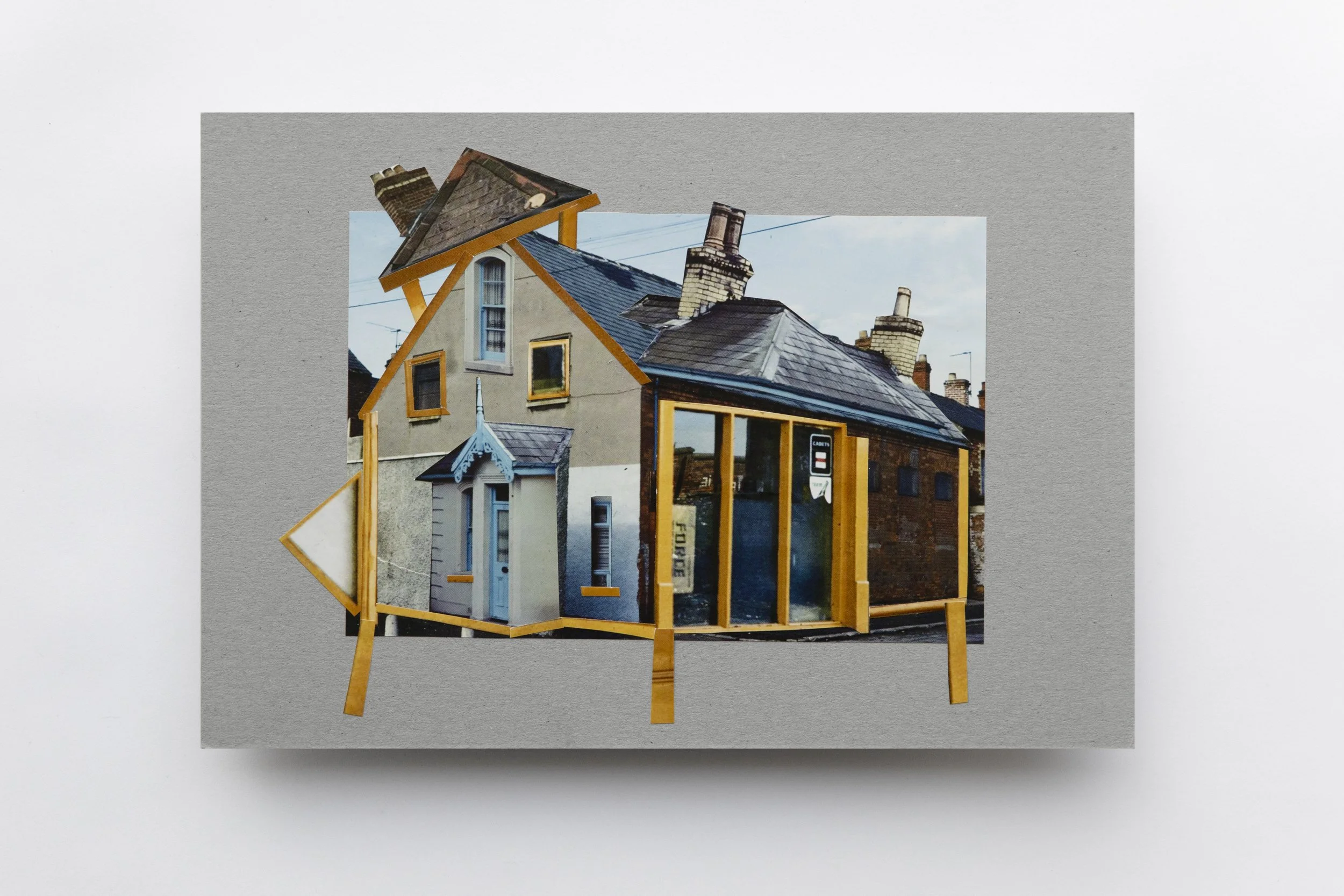
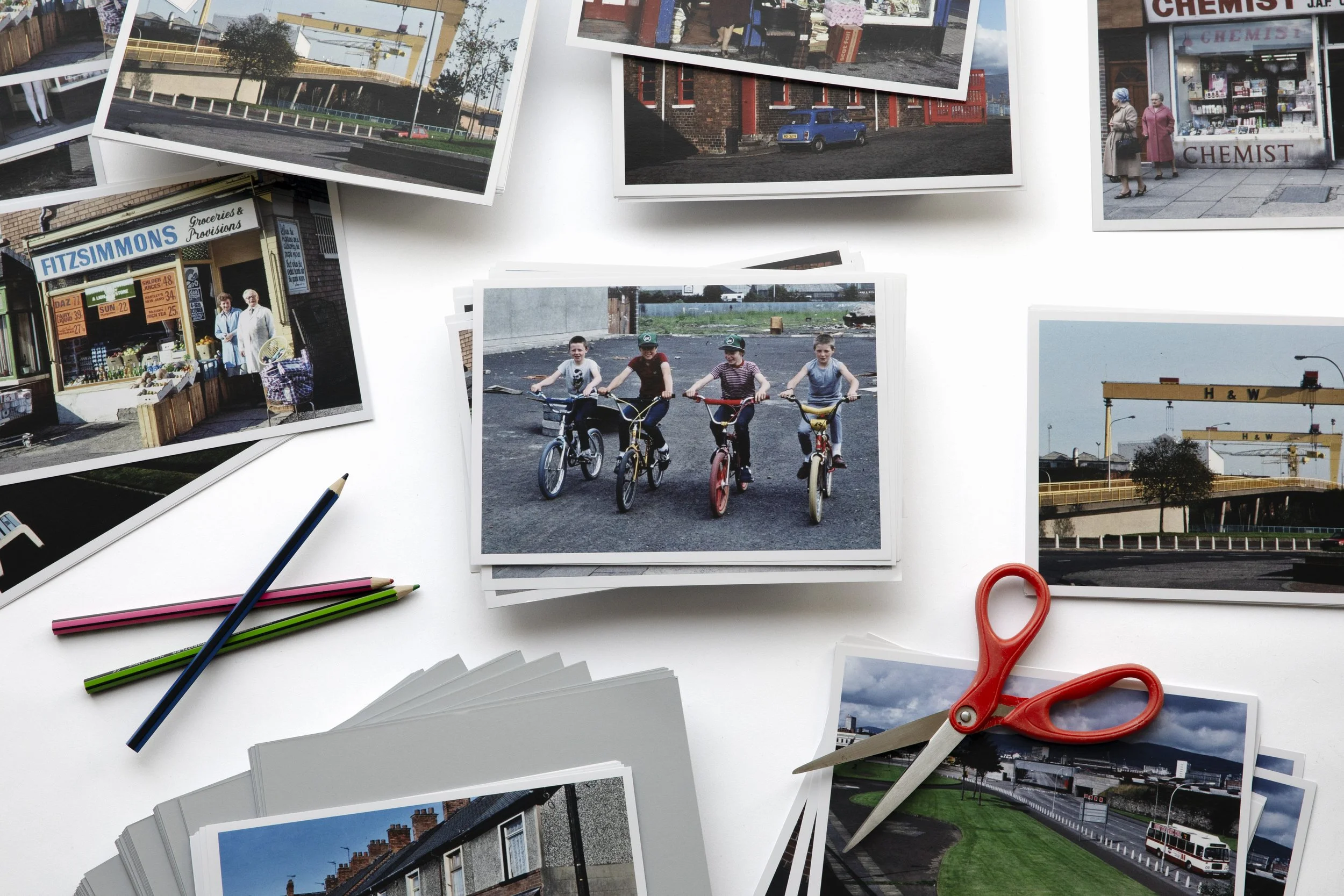
Designed for use in primary school settings, the toolkit introduces children to the art of collage-making through a hands-on, creative learning activity. Using images of Belfast drawn from a historic photographic archive by Albert E. McAlpine, who documented the city throughout the 1980s, the toolkit invites children to reimagine Belfast through a process of world-building.
Participants are encouraged to create their own high streets, shops, and imagined environments, using collage to construct narratives about place, community, and change. The activity supports creative expression while fostering critical thinking, problem-solving, and discussion around the built environment and everyday life.
The Belfast Collage Toolkit supports educators in using visual art as a tool for engagement, dialogue, and independent thinking in the classroom. It is designed to be accessible, adaptable, and responsive to different learning contexts.
The toolkit is the culmination of Jan McCullough’s two-year project, To Make a Monument, commissioned by Household. The project explores overlooked histories and acts of labour, care, and maintenance, and the communities that form around them, using artistic practice as a means of research and reflection.
A limited number of Belfast Collage Toolkits are available free of charge to schools and educational settings within the wider Belfast area.
To request a toolkit, please contact:
📧 info@householdbelfast.co.uk
Include your name and the address of your school or education centre.
Please note that availability is limited.
2023-2024
In 2023-24, Jan McCullough used the AE McAlpine archive to explore East Belfast. Taken by local photographer Albert McAlpine primarily in the 80s and early 90s, it documents local people at work and the changes that were taking place in the neighbourhood.
Images from the archive informed collage workshops held during the 2023 Belfast Photo Festival and with young adults in the area with Autism and ADHD. Jan’s encounters and research into the legacies of labour, manufacturing and trade in East Belfast informed a new image installed on the Cregagh Road in February 2024. Associated events included collage workshops with local school children at Harding and Euston Street Primary Schools, an exhibition of the images they produce in local shops, and a guided tour as part of the 2024 Imagine! Belfast Festival of Ideas and Politics.
Generously supported by Belfast City Council, the Arts Council of Northern Ireland, Imagine! Belfast Festival of Ideas and Politics, and the family of Albert McAlpine.
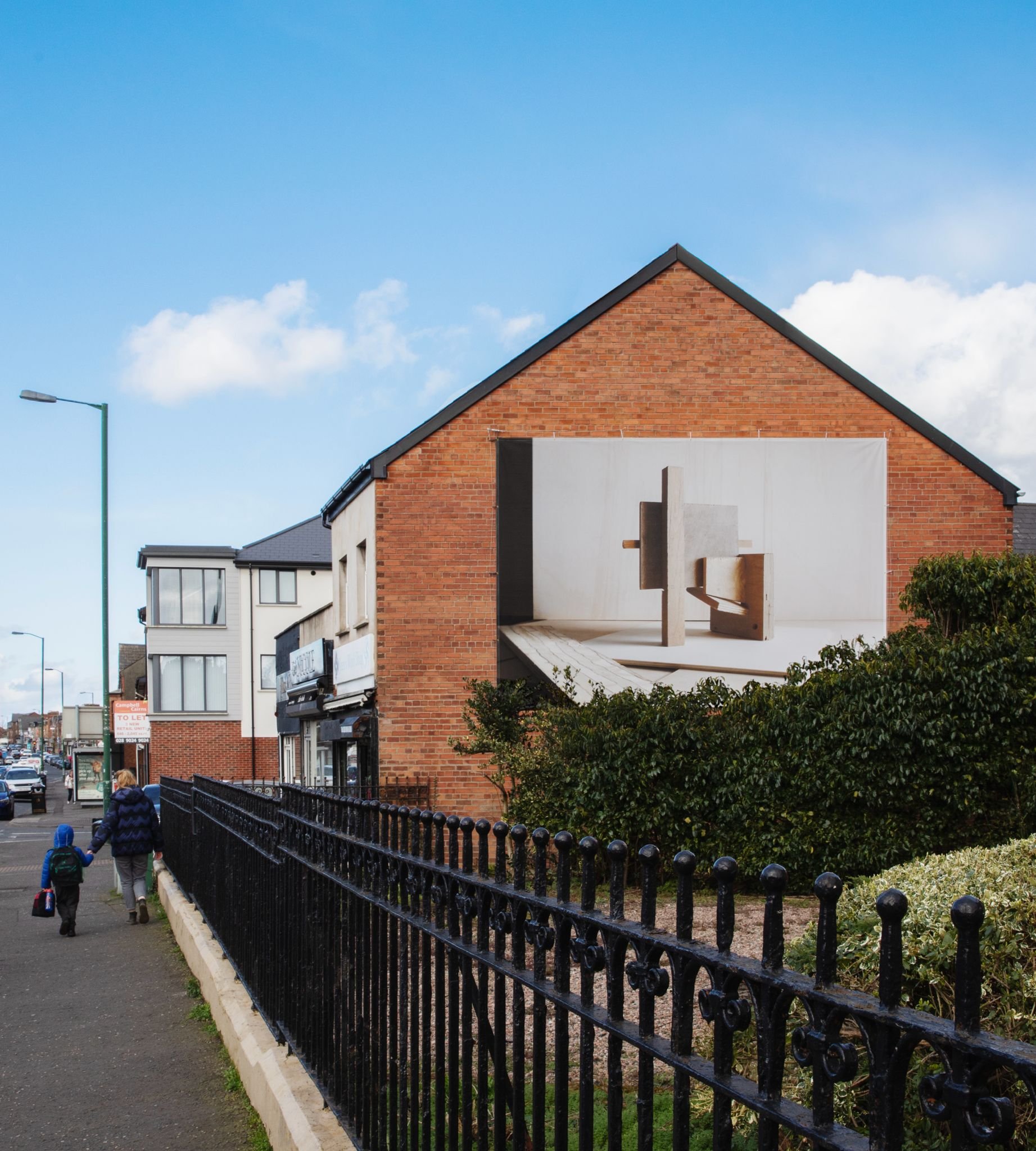
Jigs for [the Fabrication and Assembly of] Stool Legs (2024) installed on the Cregagh Road, East Belfast
Dates: 28 February - 31 March 2024
To create the image Jigs for [the Fabrication and Assembly of] Stool Legs (2024) installed on the side of Jean’s Wool Shop on the Cregagh Road, Jan has engaged with scenic construction workers who support the film and TV industry that has come to dominate the East Belfast docklands area in place of more traditional manufacturing industries.
Their highly skilled labour involves staging partial cityscapes; slices of town scenes, portions of buildings etc. Much of their work is to create the unseen structures that underpin the authenticity of the sets. Jan has collaborated with a number of fabricators to create a series of temporary architectural landscapes using their jigs - wooden custom made shapes that are used as tools to assist in the repeated cutting, placing and securing of their materials - in sculptural installations that she has photographed. These images, of which Jigs for [the Fabrication and Assembly of] Stool Legs (2024) is one, are intended as a series of temporary monuments to the inventive nature and evocative gestures of this usually invisible labour.

To Make a Monument - East, 2023: Jan McCullough used the AE McAlpine photographic archive as her starting point for To Make a Monument -East. Albert McAlpine lived most of his life in East Belfast from 1923 - 1995, where he witnessed and recorded the changes that were taking place in his local neighbourhood. During this workshop at the Strand Cinema in East Belfast, together with participants, Jan playfully ‘collaged’ images from the archive and projected the resulting images in a dark room, linking the old cinema site with the streets surrounding it, depicted in the AE McAlpine archive. Image: documentation of the workshop, courtesy of the artist.

Image: documentation of the 'To Make a Monument' collage workshop at the Strand Cinema, East Belfast, in June 2023. Courtesy of the artist.

Image: documentation of the 'To Make a Monument' collage workshop at the Strand Cinema, East Belfast, in June 2023. Courtesy of the artist.

Image: documentation of the 'To Make a Monument' collage workshop at the Strand Cinema, East Belfast, in June 2023. Courtesy of the artist.

Image: documentation of the 'To Make a Monument' collage workshop at the Strand Cinema, East Belfast, in June 2023. Courtesy of the artist.
2022
Jan McCullough’s starting point for To Make a Monument in 2022 was the National Museums Northern Ireland A.R. Hogg and R.J. Welch archive collection, which includes photographs commissioned from 1920s-40s that document the machines and wares produced in Belfast.
To Make a Monument re-presented a selection of this overlooked archive, mostly viewed by researchers and archivists, back into the public. The images selected included objects and details that acknowledge subtle acts of looking, staging, framing and making by invisible hands and eyes.
Her installations around the Queen’s University campus were part of the Belfast International Festival and publicly celebrated the presence and efforts of unseen workers. They considered how labour can be represented outside of the institution, figuratively and literally, by creating temporary monuments to the small, evocative gestures of ordinary people, the objects and goods they produced, and the everyday spaces where they worked.
This commission was possible with the support of the National Lottery through Arts Council of Northern Ireland, Belfast City Council, the Ulster Museum/NMNI, Queen’s University Belfast, and the Paul Hamlyn Foundation. Special thanks to Ben Crothers, Curator at the Naughton Gallery, and Rachel Brown, Centre Coordinator at The Seamus Heaney Centre.

Image designed by Sean Greer.

To Make a Monument, 2022: Saddle quern with rubbing stone, photographer RJ Welch (1920), glass plate negative from the Collection of National Museums NI. Installation view at Whitla Hall, Queen's University Belfast, 2022. Image courtesy of the artist.
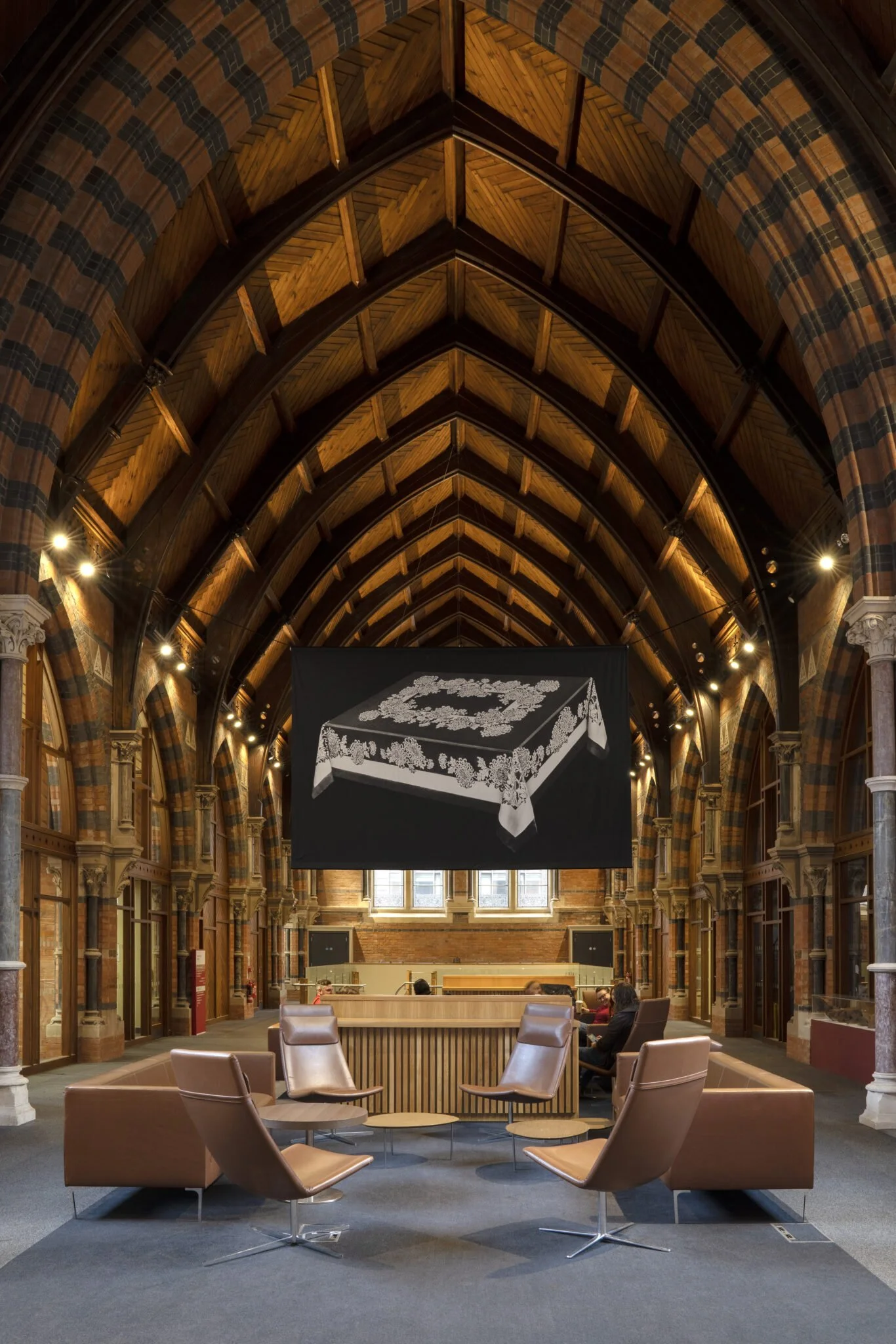
To Make a Monument, 2022: Damask tablecloth, photographer unknown, Northern Ireland (1945). Photographic negative from the Collection of National Museums NI. installation view at the graduate school, Queen’s University Belfast, 2022. Image courtesy of the artist.

To Make a Monument, 2022: Pancake machine at Chambers Motor Company, University Street Belfast, photographer A.R. Hogg (1930). Glass plate negatives from the collection of National Museums NI. Installation view at Elmwood Hall, Queen’s University Belfast, 2022. Image courtesy of the artist.

To Make a Monument, 2022: Pancake machine at Chambers Motor Company, University Street Belfast, photographer A.R. Hogg (1930). Glass plate negatives from the collection of National Museums NI. Installation view at Elmwood Hall, Queen’s University Belfast, 2022. Image courtesy of the artist.